 Arrow
Arrow 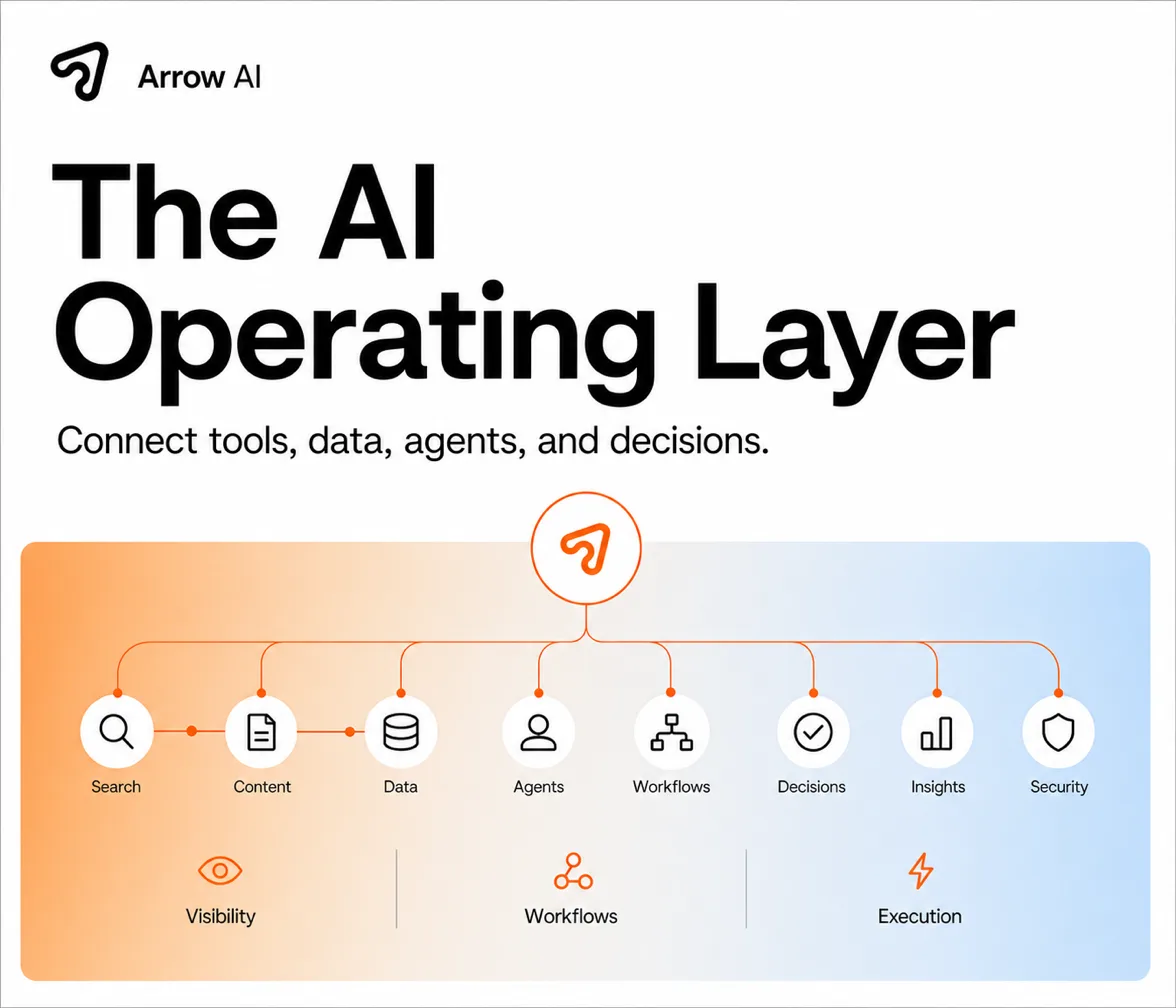
The building blocks
- Search and content: structured knowledge that AI can retrieve and explain.
- Data and memory: approved sources, customer context, history, and operational signals.
- Agents and workflows: task-specific logic that can draft, route, check, and update work.
- Insights and security: logs, permissions, QA, analytics, and human approval where needed.
Why this creates leverage
The value is not only speed. The value is repeatability. A company can turn scattered expertise into a system that new team members can use, managers can audit, and customers can experience through better interfaces.
Where to deploy it first
Good first use cases include intake, support, research, reporting, qualification, quoting, and ecommerce guidance. If the workflow repeats every week and depends on internal context, it is a strong candidate for a custom AI system.
Continue reading
Build an operating layer for your company.
Put it into practice
Reading is step one. The audit is step two.
See how AI engines describe your brand today — free, in two minutes.