 Arrow
Arrow 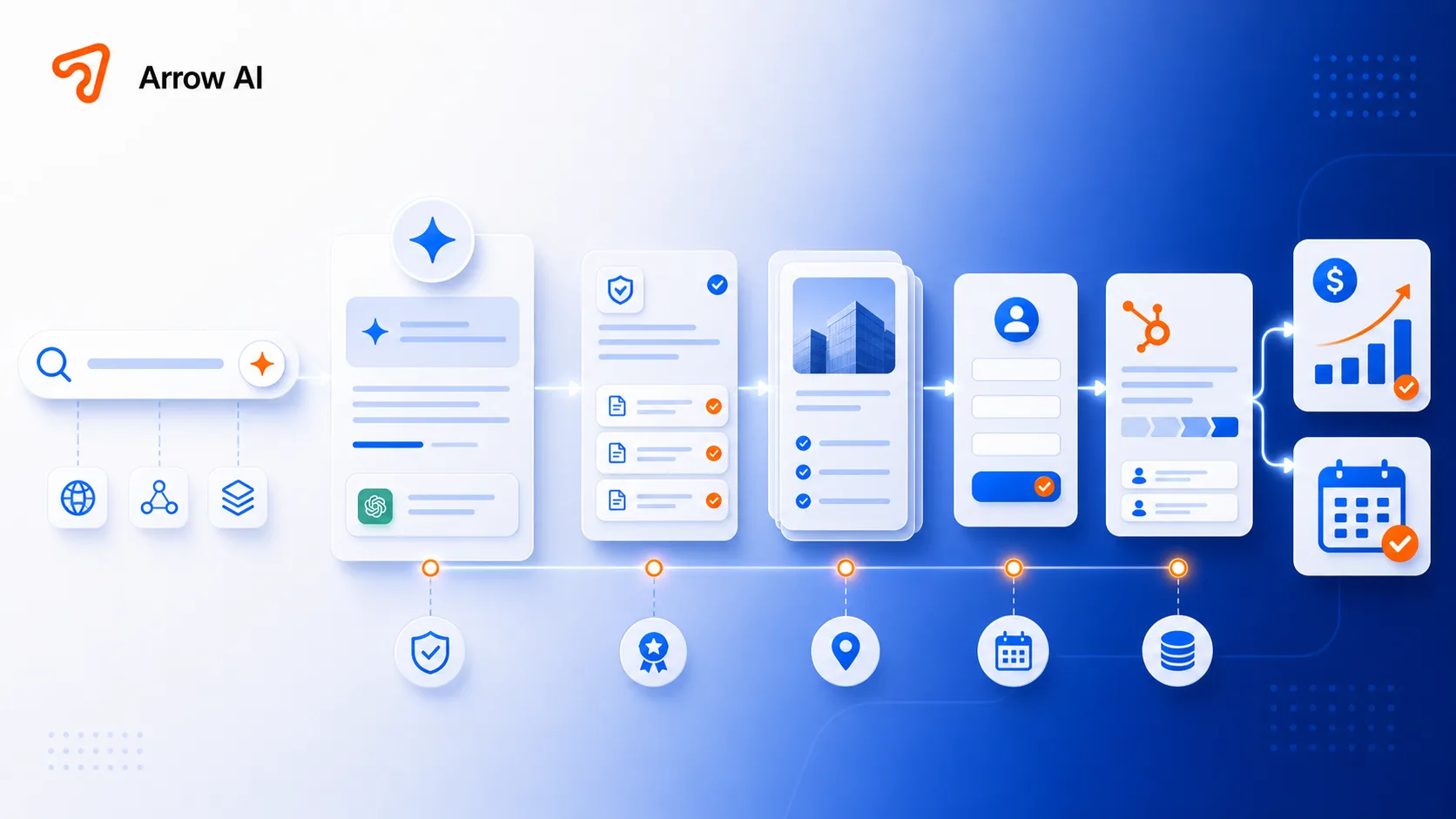
Most companies separate visibility from operations.
A company might publish content, run ads, collect form submissions, and manage sales in separate systems. That creates a gap: the brand may get discovered, but the lead arrives with weak context, slow follow-up, and no clear attribution.
The first layer makes the company easy to cite.
Arrow AI starts with answer-ready pages: service pages, local intent pages, comparison pages, proof pages, FAQs, schema, and internal links. The goal is to help AI engines understand the company as a clear entity with specific services, markets, and evidence.
The second layer captures the demand with context.
When a visitor arrives from AI search, the form or assistant should collect the right information: need, urgency, location, budget, timeline, current tools, and next step. That data should go into HubSpot, admin dashboards, calendar routing, and follow-up emails without manual copy-paste.
The third layer makes the work visible to the team.
Each lead should create a trail: source page, qualifying answers, recommended next action, owner, status, and follow-up. This is where GEO becomes more than marketing. It becomes part of the company operating system.
The Arrow AI case study structure.
More case-study reading.
Put it into practice
Reading is step one. The audit is step two.
See how AI engines describe your brand today — free, in two minutes.