 Arrow
Arrow 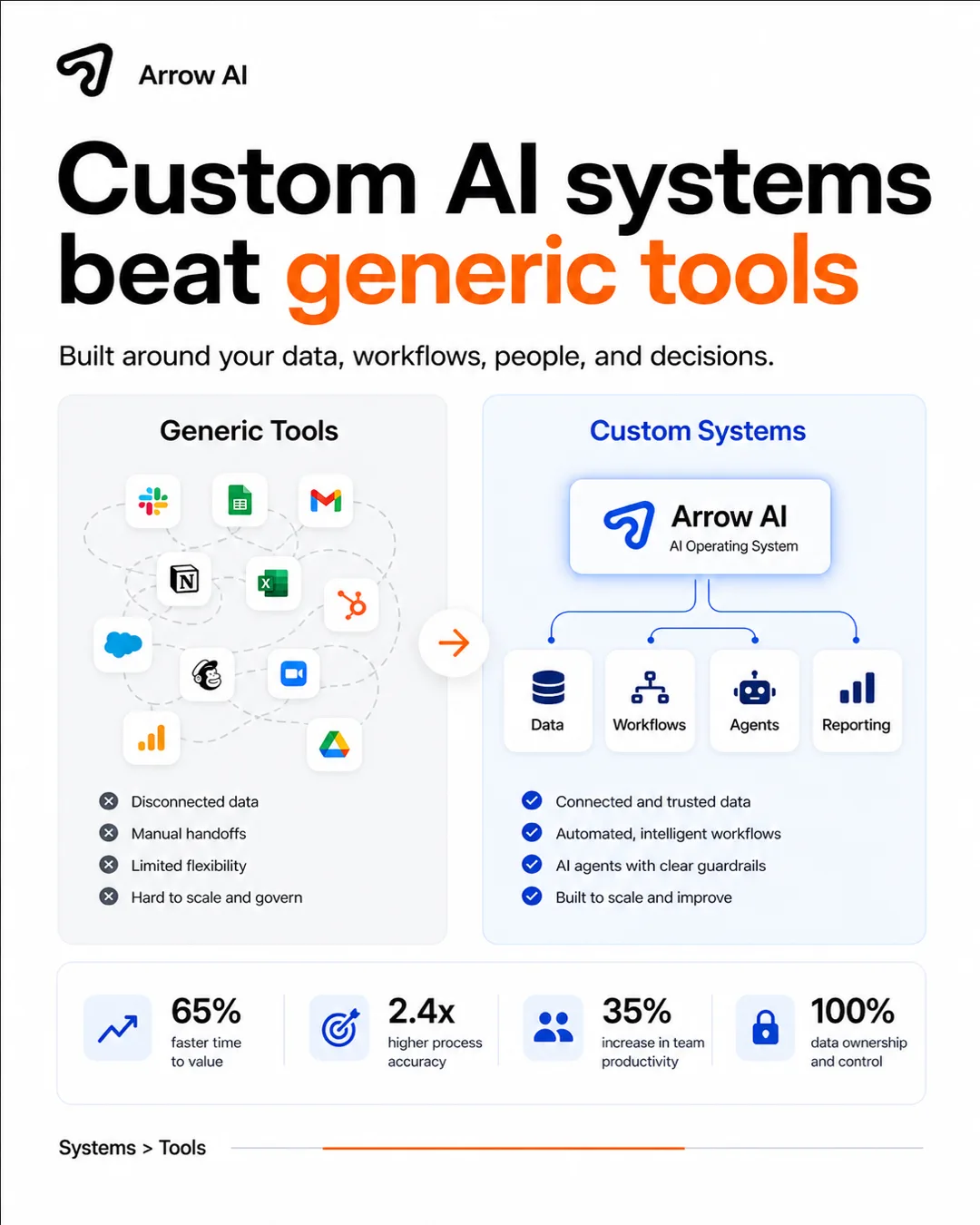
Custom AI systems connect private knowledge, approved sources, user roles, business rules, integrations, and workflows. They turn AI from a browser tab into an operational layer that teams can trust.
Generic tools are disconnected from the company’s real workflow.
Most companies already have too many tools. Adding a generic AI product often creates another place to copy, paste, check, and manually move work. The result is speed in one small task but friction across the whole process.
A custom system starts with how the company already operates: CRM data, documents, calendars, offers, approvals, client questions, internal knowledge, and reporting. AI becomes useful because it is placed inside the workflow instead of beside it.
The core pieces of a real AI system.
Knowledge base
Approved company sources, policies, documents, services, pricing logic, and FAQs.
Interfaces
Chat, dashboards, client portals, admin panels, and ecommerce assistants built around actual users.
Integrations
HubSpot, Shopify, Slack, Stripe, Google Calendar, internal databases, and custom APIs.
Governance
Permissions, guardrails, escalation rules, audit trails, and human validation where risk matters.
Automation
Lead routing, document generation, support answers, reporting, content production, and task follow-up.
Visibility
GEO pages and answer-ready content that make the company easier to discover in AI search.
We build around the business outcome, not the model demo.
Arrow AI designs custom AI systems for companies that need execution: lead capture, AI agents, GEO content, client-facing assistants, admin dashboards, and internal software. The goal is not to show AI. The goal is to make the work faster, clearer, and easier to control.
For next steps, read how the AI operating layer connects tools and decisions, or explore the Arrow AI GEO offer if visibility is the first priority.
Put it into practice
Reading is step one. The audit is step two.
See how AI engines describe your brand today — free, in two minutes.