 Arrow
Arrow 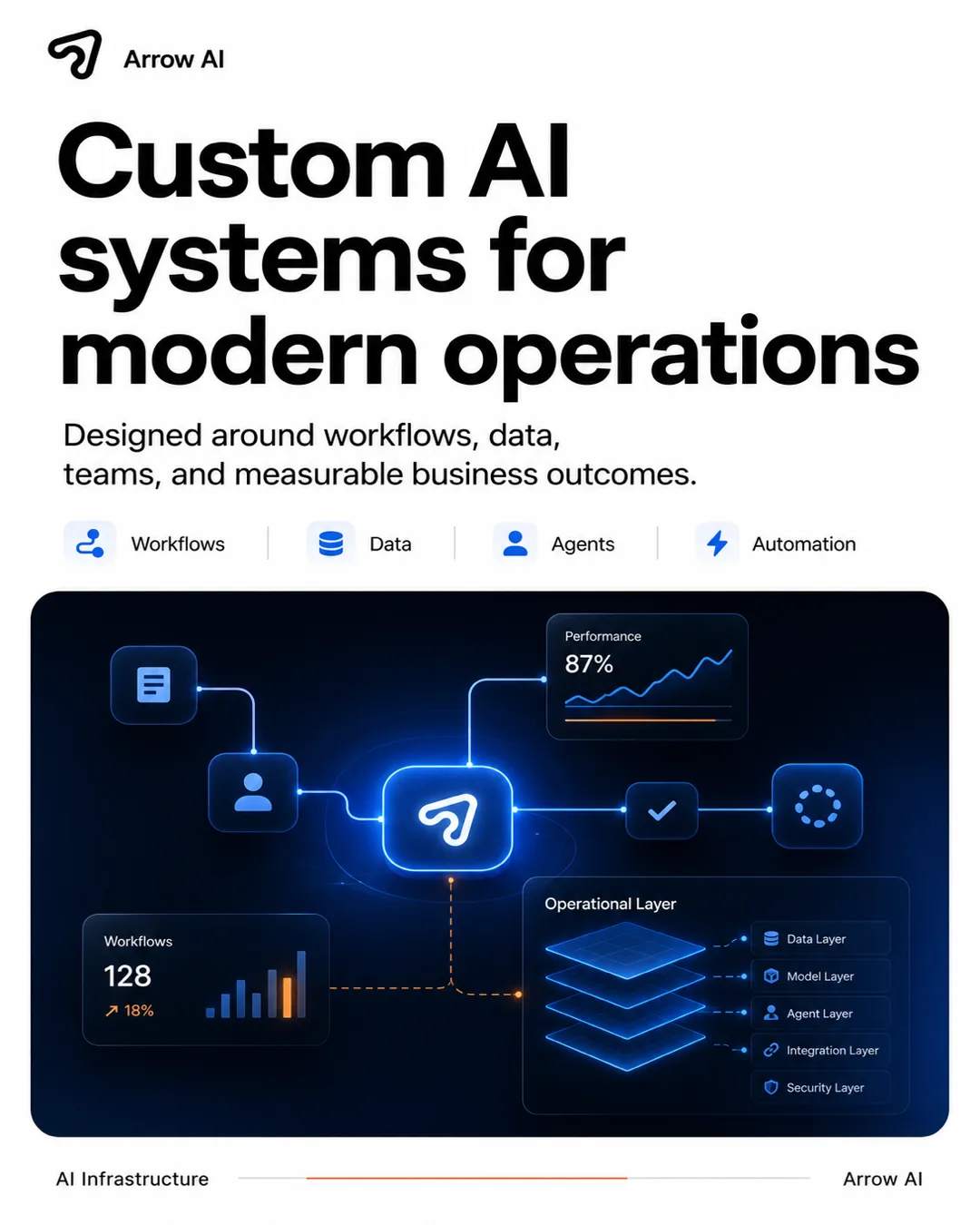
Generic AI tools create scattered usage. Custom AI systems connect workflows, data, interfaces, and decisions into one operating layer.
The difference between a tool and a system
A tool helps one person complete a task. A system helps a team repeat a workflow with control. For AI, that means the model is only one component. The real product includes data access, permissions, routing, logs, UI, admin views, and feedback loops.
High-value operational use cases
Custom AI systems work best where there is repeated context: sales qualification, client intake, ecommerce recommendations, document review, support triage, reporting, onboarding, and internal knowledge search. These workflows already happen every day. AI simply makes them faster and more consistent.
Build around how the business already works
Arrow AI starts by mapping the actual workflow instead of forcing the company into a generic product. The system is then designed around the team, tools, customer journey, and handoff points that already exist.
How to turn this into an Arrow AI system.
- Map the workflow before choosing the model.
- Connect the tools where work already happens.
- Create an interface employees or customers can actually use.
- Add guardrails for permissions, approvals, and escalation.
- Maintain the system as the business changes.
Use this article with Arrow AI GEO, custom AI systems, and the industry pages to connect visibility, workflows, and conversion. For a practical starting point, run the free Arrow AI audit.
Put it into practice
Reading is step one. The audit is step two.
See how AI engines describe your brand today — free, in two minutes.