 Arrow
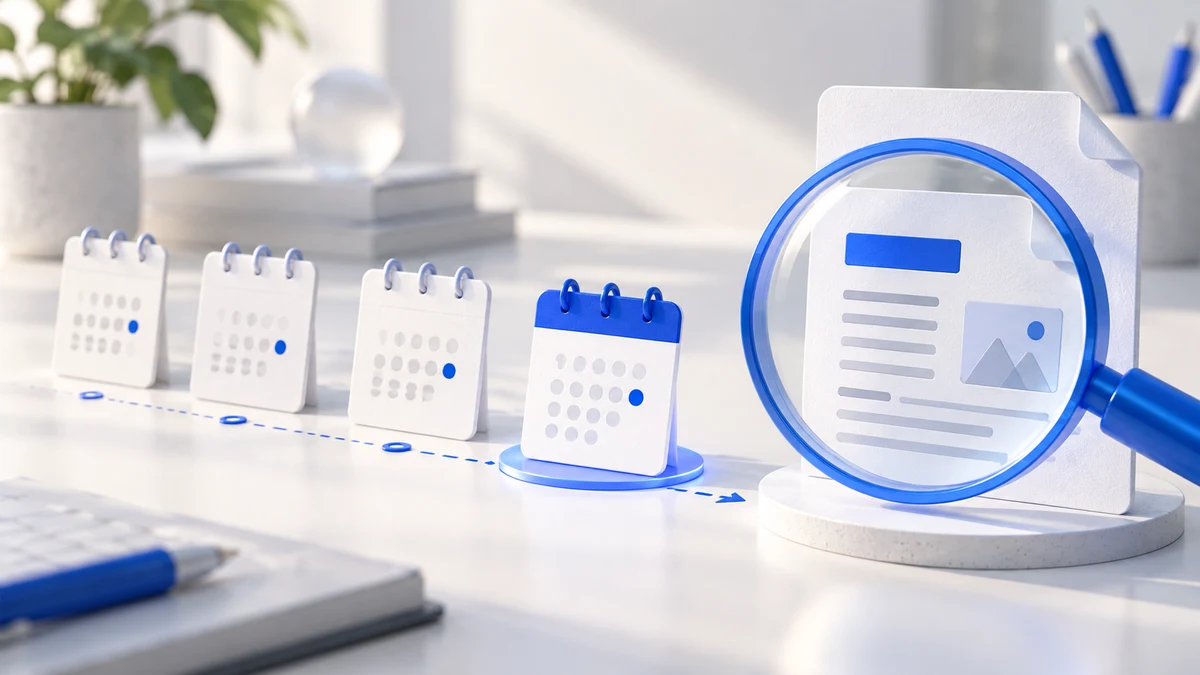
Diagnose flat AI visibility before approving more content. Separate crawl access, category accuracy, source selection and qualified visits.
- 1. State the question
- 2. Inspect the source
- 3. Change one gap
- 4. Recheck answers
What should you check when citations stay flat?
Start with the failure you can actually observe: an inaccessible page, an incorrect description of the business, a missing source link, or no qualified visits. Those are different problems. A publishing schedule cannot tell you which one you have.
A Reddit discussion about two months of AI visibility work describes schema, directory listings and frequent articles without a clear improvement. That is a useful research question, not a benchmark for how long every GEO program takes. The post also raises business-category confusion, which deserves a different response from a flat citation chart.
Before spending another month on the same activities, write one sentence describing the gap. For example: the business is described as a general consultancy when its public offer is a specialist implementation service. That statement points to source accuracy. A sentence such as no visits from AI tools points instead to referral evidence and the relevance of the questions being monitored.
Separate the stages before changing the work
Access, understanding, selection and commercial action need separate evidence. A bot request does not establish that a page was cited; a citation does not establish that a buyer visited or made an inquiry.
| Observation | Useful check | Decision it can support |
|---|---|---|
| Important page is not available to a crawler | Response status, access rules and canonical | Repair a technical obstacle |
| Business is assigned the wrong category | Compare the answer with service and company pages | Clarify inconsistent public information |
| Relevant answer cites a different source | Read the actual cited page and question | Identify the missing buyer detail |
| Citation exists but no useful visit is recorded | Referral reporting and the next action on the page | Revisit audience fit and conversion path |
For Google's AI features, Google's documentation identifies indexing and snippet eligibility as technical requirements. Meeting them is not a promise of inclusion. For ChatGPT search access, use the separate OpenAI crawler guidance. Do not use one platform's inspection result to certify another platform.
Build a diagnosis you can repeat
Keep a small set of buyer questions stable long enough to compare them. Record the question, engine, interface, market, date, answer and cited URLs. Keep an unchanged comparison question or page where practical. If a provider or interface changes, annotate the break rather than blending the old and new observations into one line.
Then review the pages that should answer those questions. Check that the offer, audience, location or service area, product constraints and next action agree. Fix a factual contradiction immediately; do not retain incorrect information merely to preserve an experiment. Group the remaining edits by purpose so that a later review can explain what changed.
The purpose is not to prove that one sentence caused a model to change. It is to replace an unstructured collection of screenshots with a traceable account of the question, source, edit and subsequent observation. For baseline design, use the existing AI citation tracking guide.
Worked example: a category correction
Consider a fictional software implementation company whose homepage says business consulting, whose main service page explains CRM migrations, and whose public directory entry still describes an old training offer. This is an illustrative diagnosis, not an Arrow customer result.
The first intervention is to align those descriptions with the current service. The company also publishes a concrete migration scope: supported systems, responsibilities, exclusions and what a client must supply. It records the publication date and the buyer questions being checked. It does not add a new article every day simply to make the site appear active.
At the next scheduled review, the company asks whether the category is described more accurately, which URLs are cited, and whether visitors reach the migration inquiry page. It can report a correction in the observed wording without claiming an increase in leads. If the wording remains wrong, the next review examines the sources actually being used, rather than assuming that more time alone will fix the issue.
When should you continue, change or stop?
Continue when the work has addressed a documented gap and the next review can evaluate it. Change the plan when the observed obstacle differs from the work being sold. Pause discretionary content production if the team cannot identify an audience question, a useful source page or a credible measurement method.
A review date is an operating agreement, not a ranking deadline. Two months of flat observations neither proves that GEO cannot work nor justifies indefinite spending without a diagnosis. Set the next action, owner and review condition before approving another cycle. Arrow GEO and the free GEO audit provide a starting point for identifying public-information gaps; they do not guarantee a citation timetable.
Sources and editorial scope
Reviewed October 22, 2026. Public Reddit discussions supply qualitative questions, not measured search volume or verified ranking claims. Platform-specific statements link to official documentation beside the claim. The workflows and examples are Arrow AI editorial guidance. Fictional scenarios illustrate a method; they are not customer results, measured demand or evidence of ranking gains.
- Reddit discussion about two months of AI visibility work
- Google's documentation
- OpenAI crawler guidance
Part of SEO/GEO decisions: evidence before tactics. Explore Arrow GEO or request a free audit to identify the next public-information gap.