 Arrow
Arrow 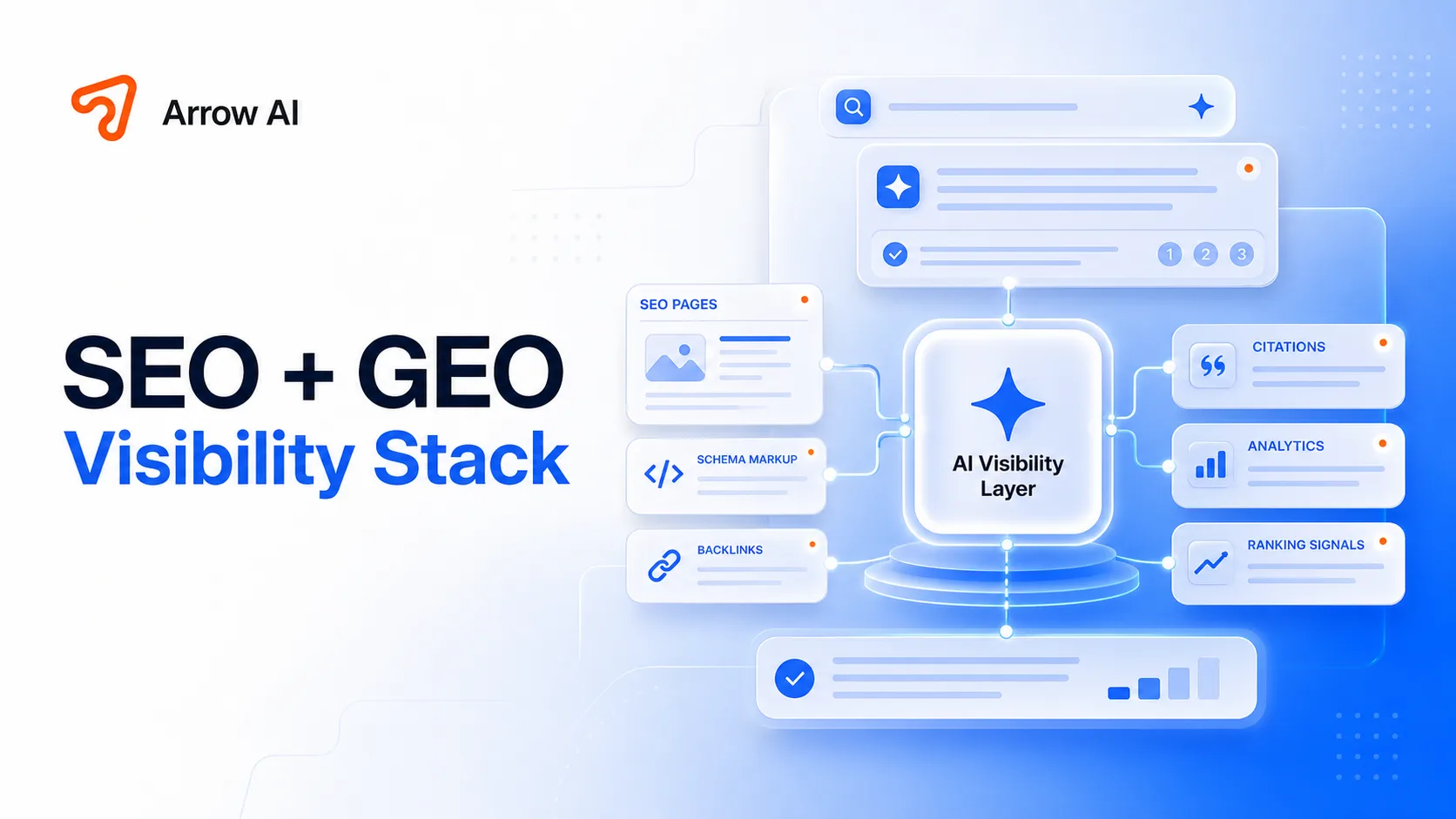
The goal is not to expose private data or over-optimize for one platform. The goal is to publish clear, useful, verifiable pages that make your company easier to understand, easier to cite, and easier to contact.
SEO brings discoverability. GEO brings answer readiness.
Traditional SEO helps pages become crawlable, useful, and relevant inside search results. GEO, or generative engine optimization, adds another layer: it prepares content so AI systems can summarize, compare, recommend, and cite the company with confidence.
The two disciplines should not compete. A strong SEO page gives the site structure, intent coverage, metadata, crawlability, and authority. A strong GEO page gives AI systems clean entities, direct answers, proof, source clarity, use cases, and next-step context.
Six layers make the company easier to cite.
Entity clarity
Explain who the company serves, what it builds, where it operates, and which problems it solves.
Answer-ready pages
Create focused pages that answer real buyer questions instead of hiding everything inside vague marketing copy.
Structured metadata
Use titles, descriptions, schema, image alt text, canonical URLs, and clean internal links.
Proof signals
Publish public examples, capabilities, case-study style pages, methodology, FAQs, and credible explanations.
Topical authority
Connect articles, service pages, GEO pages, industry pages, and case studies around the same core themes.
Conversion paths
Route traffic and AI-driven interest into forms, calendars, CRM, chat, and follow-up workflows.
You can be useful without revealing private information.
A good SEO + GEO strategy does not require exposing internal prompts, client data, proprietary logic, private dashboards, or confidential performance numbers. In fact, public pages usually work better when they stay focused on the buyer's question.
Safe content can include the problem being solved, the category, the workflow, public use cases, implementation principles, governance considerations, decision criteria, and the next step a user should take. That is enough context for people and AI systems to understand relevance without crossing a confidentiality line.
How Arrow turns visibility into an operating system.
Arrow AI connects SEO, GEO, content, custom AI systems, and workflow automation into one practical growth layer. The public pages help the company get understood. The conversion layer helps users ask better questions. The internal system helps the team route, qualify, and act on the demand.
The strongest result comes when the website is not isolated from operations. A GEO article can connect to an industry page, an audit form, a HubSpot workflow, a calendar, and a custom AI assistant. That turns visibility into a measurable business path.
Put it into practice
Reading is step one. The audit is step two.
See how AI engines describe your brand today — free, in two minutes.