 Arrow
Arrow 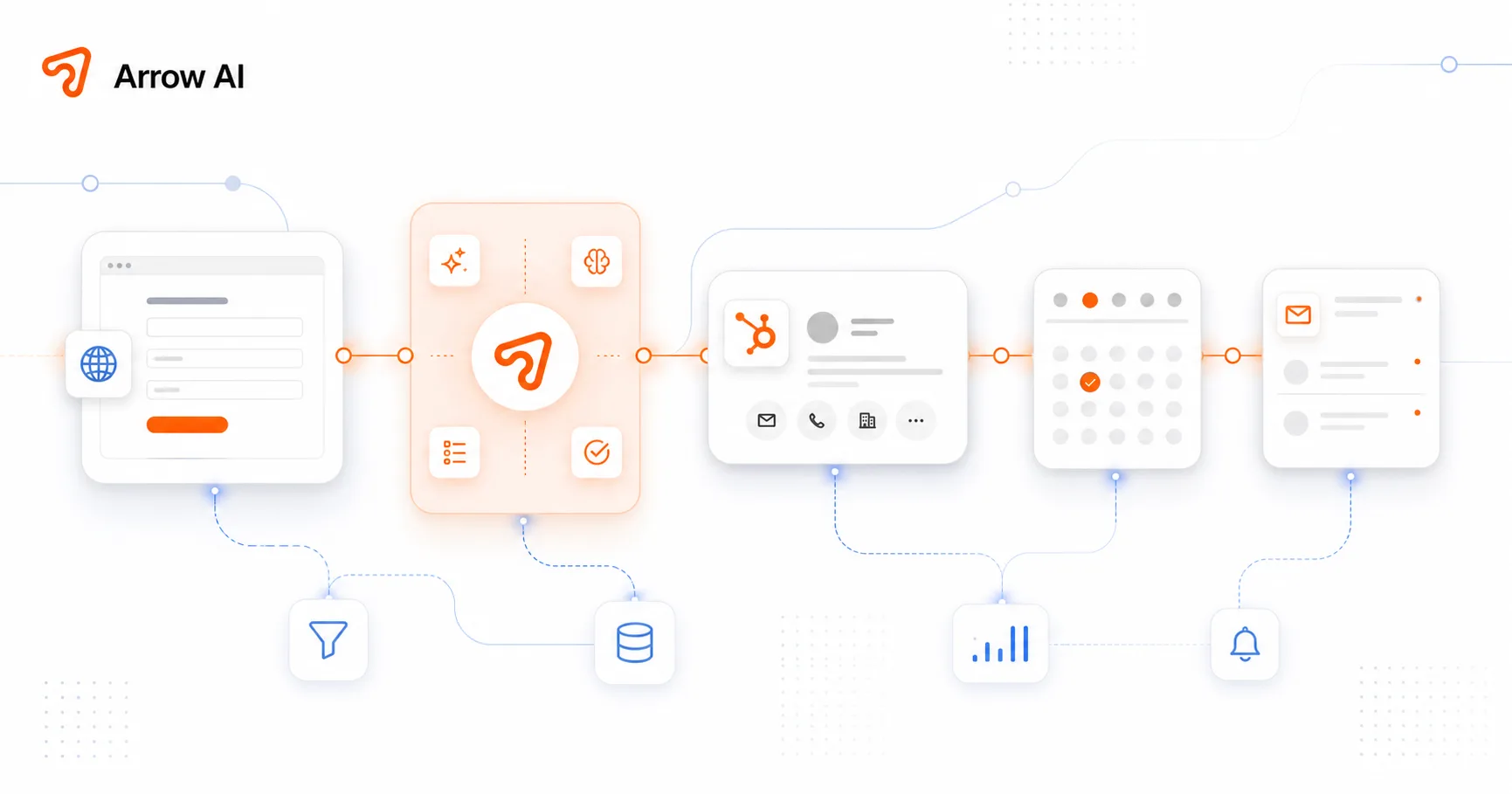
Most websites lose context after the form submit.
A user submits a form, an email arrives, and someone has to decide what it means. That creates slow follow-up, messy attribution, and weak qualification. The problem is not the form. The problem is that the form is disconnected from the workflow.
AI should ask for the information the sales team actually needs.
A strong intake system adapts questions based on service type, urgency, location, budget, timeline, current tools, and desired outcome. It can produce a short summary, qualify the request, and recommend the next action before a human replies.
The CRM record should be created automatically.
When the intake layer connects to HubSpot or another CRM, every lead can include source page, answers, AI summary, status, owner, priority, and next step. That gives the company pipeline visibility instead of another inbox to check.
The admin dashboard keeps the team in control.
Automation should not hide what happened. The admin dashboard should show submissions, source, status, notes, follow-up history, and routing. The team can review, update, export, or take over when a lead needs a human decision.
Calendar and email close the loop.
After qualification, the system can offer the right calendar, draft a useful reply, notify the correct person, and keep the CRM record updated. This is how AI intake becomes a real operating layer, not just a chatbot.
Connect intake to the rest of the site.
Put it into practice
Reading is step one. The audit is step two.
See how AI engines describe your brand today — free, in two minutes.