 Arrow
Arrow 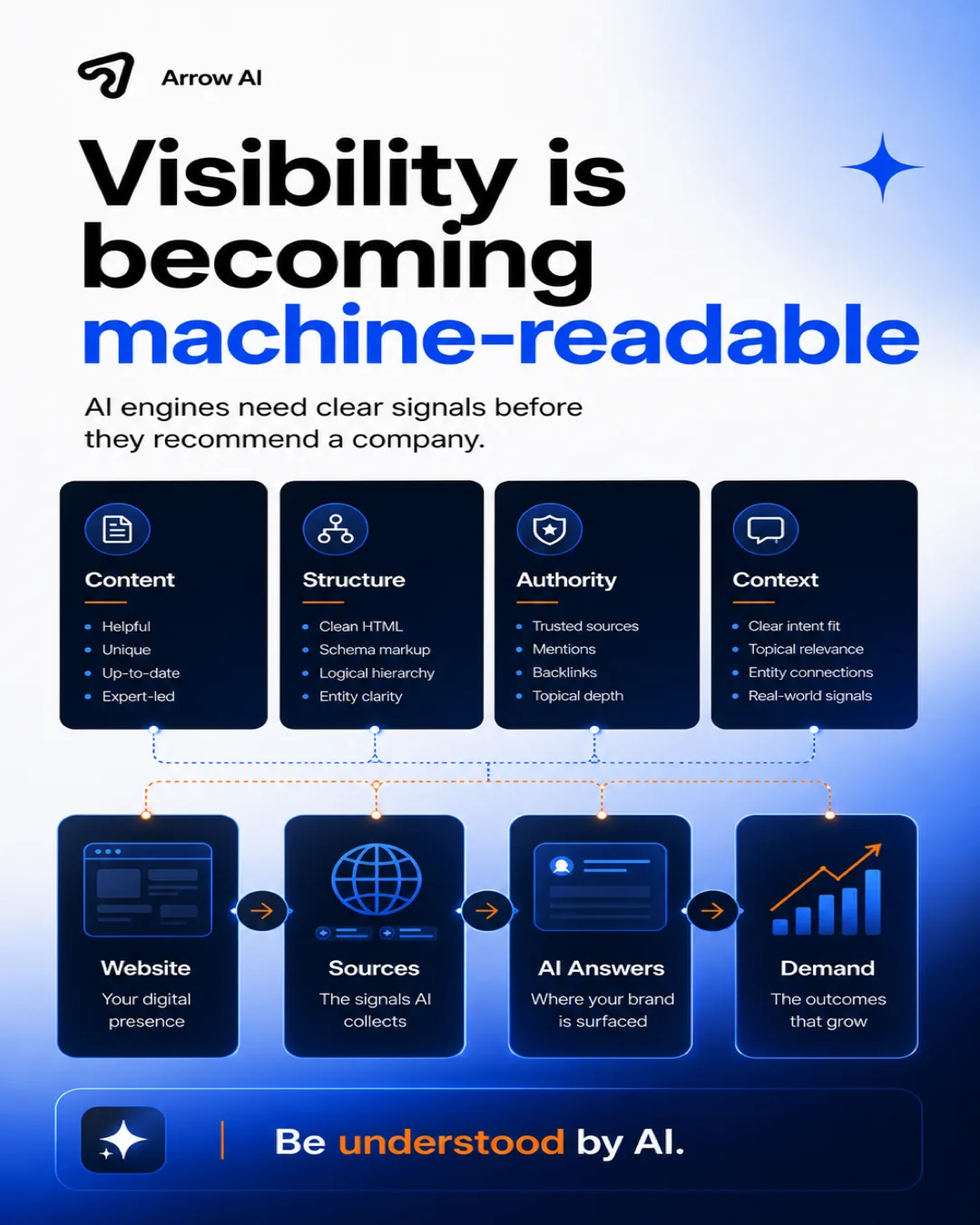
Machine-readable content is content that makes meaning explicit: clean headings, direct answers, structured data, semantic sections, descriptive alt text, internal links, and schema that tells search and AI systems what each page represents.
AI engines reward clarity because they need to reduce uncertainty.
When a model generates an answer, it looks for reliable signals. Vague landing pages, unclear service names, missing schema, and empty alt text make it harder for AI systems to verify a company. Clear content gives the model confidence.
That is why GEO is not only “write more blogs.” It is an information architecture project. Every page needs a role, every image needs context, and every important entity needs a trail of proof.
What to add across your site.
Direct definitions
Open key pages by clearly saying what your company does, who it serves, and what outcome it creates.
FAQ blocks
Answer buyer questions in short, structured sections that can be cited by AI engines.
Schema markup
Use Organization, Service, BlogPosting, FAQPage, BreadcrumbList, and LocalBusiness where relevant.
Image alt text
Describe what images show and connect them to the offer, industry, or concept on the page.
Internal links
Connect GEO pages, industry pages, blog posts, case studies, and audit CTAs.
Proof language
Use specific examples, workflows, deliverables, tools, regions, and industries instead of generic claims.
We turn content into a visibility system.
Arrow AI builds pages that humans can read and AI engines can parse. That means better titles, tighter sections, original images with SEO alt text, schema, internal links, and CTA placement that turns visibility into leads.
Start with the GEO ranking framework, then connect it to custom AI systems so discovery and operations work together.
Put it into practice
Reading is step one. The audit is step two.
See how AI engines describe your brand today — free, in two minutes.