 Arrow
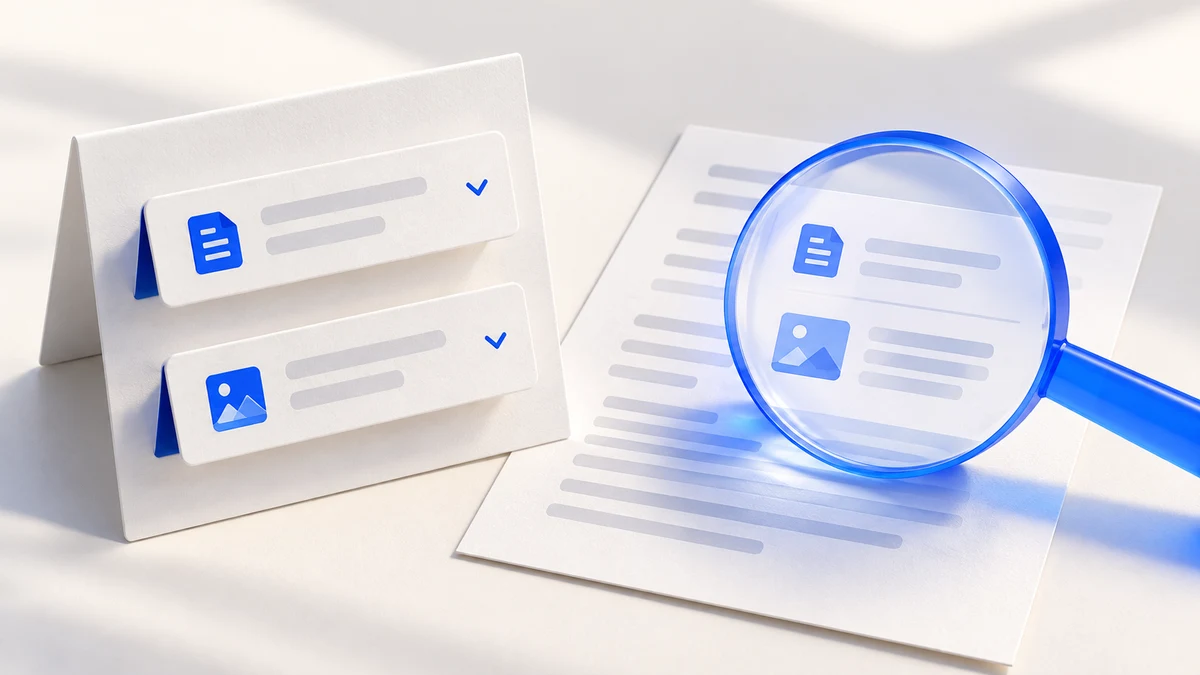
Inspect accordions, product cards and interactive pricing before a rebuild. Keep usable design while making important buyer information accessible.
Do you need to replace your website's widgets for GEO?
Not automatically. Keep useful interface components when the important information can be reached, read and understood. Replace or repair a widget when inspection shows that it hides essential content, breaks navigation or fails to expose the relationships a buyer needs. Judge the actual page rather than the name of its framework.
A Reddit discussion about rebuilding pages for AI citations raises icon boxes, logo rows and interactive sections. These are credible inspection targets. The discussion does not establish that every accordion is invisible to every AI crawler or that a redesign by itself produces citations.
The decision is about information delivery. A pricing table that only appears after an unavailable request is a different problem from a native details element whose text already exists in the page. A clear interface and robust text access can support each other.
What should you inspect first?
Inspect both the source response and the rendered page. They can contain different information. Google's JavaScript SEO documentation describes Google's crawling and rendering process; that process is not proof that another crawler executes the same scripts.
URL Inspection can help examine Google's view of a page and its resources. A successful live test is still different from a guarantee of indexing or selection. When checking another system, document which evidence is actually available instead of relabeling a browser screenshot as the crawler's view.
For the page itself, choose one essential buyer fact and locate it end to end: the service name, a price condition, an availability constraint or the next action. If you cannot find it as meaningful text without a fragile sequence of actions, that is a stronger reason to change the component than a vague claim that AI prefers simple websites.
A component-by-component decision table
| Component | Keep it when | Repair it when |
|---|---|---|
| Accordion or tab | The information is present and the control is usable | Essential text is absent until an unavailable fetch or interaction |
| Press or partner logo row | Logos have an honest relationship to the business and appropriate text context | Images imply endorsements that the page cannot substantiate |
| Product card | The name, attributes and destination are readable | Only a decorative image conveys the important product facts |
| Pricing interface | Conditions and totals have a usable text representation | A required condition appears only after an undocumented calculation |
| Animated background | It supports an already readable message | It carries the sole copy of a service claim or instruction |
This is a robustness checklist, not a list of ranking factors. In particular, adding a text description cannot turn an unsupported press claim into verified evidence. Fix the claim as well as its presentation.
Worked example: a migration-service comparison
A fictional service page uses three attractive icon cards for migration, training and support. The rendered cards contain only icons and short slogans; the practical exclusions sit inside a client-only drawer that fails when its data request is blocked.
The team keeps the cards but adds clear service names and concise descriptions in the initial HTML. It moves the important exclusions into a visible comparison table and retains the drawer for optional detail. The review checks keyboard use, phone layout, readable text and the actual destination links.
The result that can be verified immediately is improved access to the stated information. A later citation, if observed, needs its own record and should not be attributed automatically to the new table. This is an illustrative design decision, not an Arrow customer case study.
What should a developer deliver?
Request the URL, the essential facts being tested, a source-versus-rendered comparison and a record of any access failures. The handoff should identify what changed and why the new representation is more robust. Include image dimensions and descriptive alt text where an image conveys content; do not fill decorative image alt attributes with search keywords.
Use the machine-readable content checklist for the wider page review. If the proposed fix is only a large JSON-LD graph, read the schema evidence guide first. An Arrow GEO audit starts with the buyer information that is missing or difficult to use, rather than requiring every site to be rebuilt.
Sources and editorial scope
Reviewed October 22, 2026. Public Reddit discussions supply qualitative questions, not measured search volume or verified ranking claims. Platform-specific statements link to official documentation beside the claim. The workflows and examples are Arrow AI editorial guidance. Fictional scenarios illustrate a method; they are not customer results, measured demand or evidence of ranking gains.
- Reddit discussion about rebuilding pages for AI citations
- Google's JavaScript SEO documentation
- URL Inspection
Part of SEO/GEO decisions: evidence before tactics. Explore Arrow GEO or request a free audit to identify the next public-information gap.