 Arrow
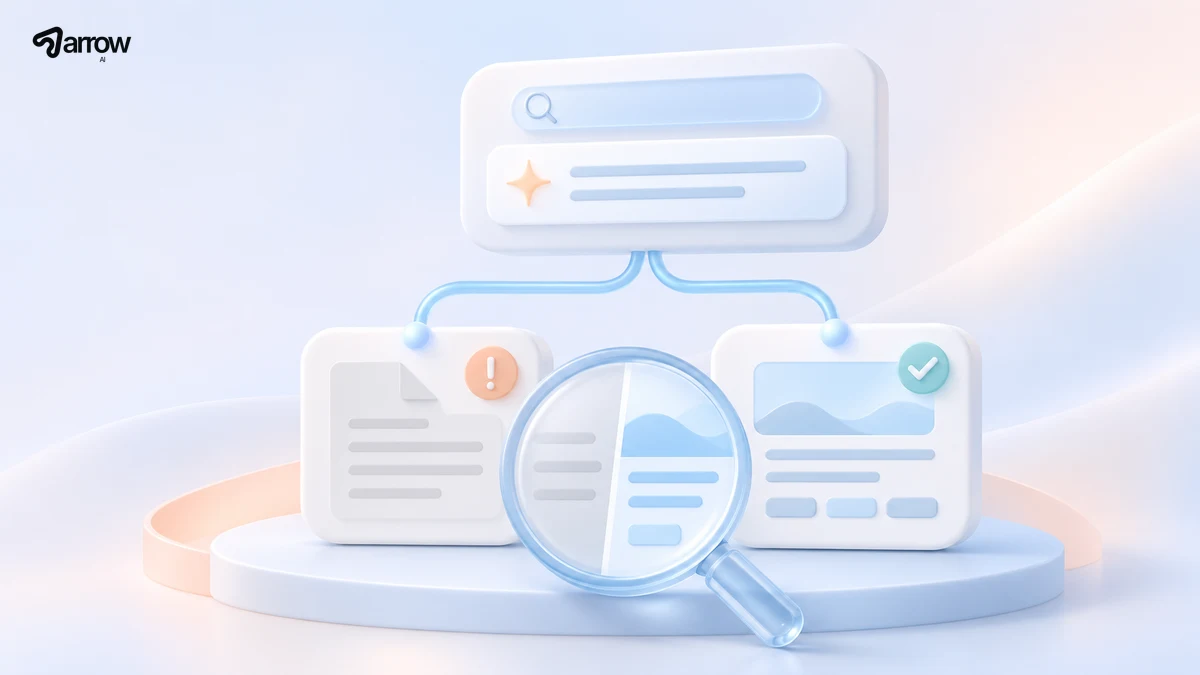
Find out why ChatGPT may cite an old or unexpected URL. Compare the cited fact with the intended page, make one fix, and retest the question.
1. Open the citation before changing your site

Suppose a buyer asks which of your properties offers a flexible group room block. ChatGPT cites an old wedding guide instead of your group sales page. That looks like a citation problem. But the older guide might be the only place you publish the actual minimum room count. From the reader’s perspective, the real gap is that your current group page omits the evidence needed to make the decision.
Start by opening the citation. The ChatGPT search documentation explains that search responses may include citations and recommends checking whether the cited page supports the answer. Save the exact question, date, answer passage, cited URL and final destination after any redirect. Record the URL you expected and why it would better serve the reader.
Is it the wrong page, or the right fact on the wrong page?
| What you see | What to inspect | What to change first |
|---|---|---|
| Old guide with the current answer | Whether the intended page contains that same fact | Add the verified fact to the decision page; link to it from the guide |
| Old guide with an outdated answer | The date, owner and other pages repeating the old claim | Correct the source and annotate meaningful changes |
| A similar product or location | Entity names, service boundaries and page titles | Make the differences explicit on both pages |
| Different URL, same useful content | Redirects, canonical URL and visible final destination | Fix routing only if it actually causes a problem |
| Source does not support the claim | What the cited text really says and whether another source is used | Record a mismatched citation; avoid rewriting a correct page for one answer |
A page is “wrong” only if it misleads the reader or fails the task. If the guide answers the question well and gives a clear route to a quote, that citation can be useful. A switch to a sales page is not automatically an improvement.
Make the intended page worth citing and visiting
Put the decision fact into visible text, with the conditions that make it true. In the group booking example, say what counts as a group, which dates require review and how to ask for a quote. Link to that page from the older guide with descriptive wording such as “group room block requirements” rather than “click here.” Keep the useful older guide available if it still serves a distinct need.
If the intended page cannot be reached publicly, fix the access problem before changing the copy. Check that the URL resolves, that it loads the right content without a login, and that canonical tags and internal links point where intended. Google’s site guidance for AI features explains crawlability and discoverability for Google Search; use it as a technical baseline, not as a description of how ChatGPT chooses sources.
Retest the question without declaring a win too early
Run the original question in a fresh search-enabled conversation under comparable conditions. Then try two natural variations without telling the assistant which URL to prefer. Save what appeared and whether the answer now states the verified fact. Repeat on a later date if the issue matters to the business. A single changed citation tells you what happened on that run, not which edit caused it.
If you find conflicting facts across pages or listings, use the Brand Facts Checker to organize a source-by-source comparison. For measurement on Google, see what AI impressions actually mean. Keep observations from different platforms in separate columns.
Sources and editorial scope
Reviewed November 3, 2026. An Arrow AI diagnostic workflow based on the linked platform documentation. Scenarios and numbers are illustrative; no client results or guaranteed ranking changes are presented.
Part of AI News — November 2026. Explore Arrow GEO or request a free audit to identify the next public-information gap.