
Arrow AI
Free See how AI engines talk about your brand Run the GEO audit ->
++

Destination intent

Match yacht destination intent before every first contact

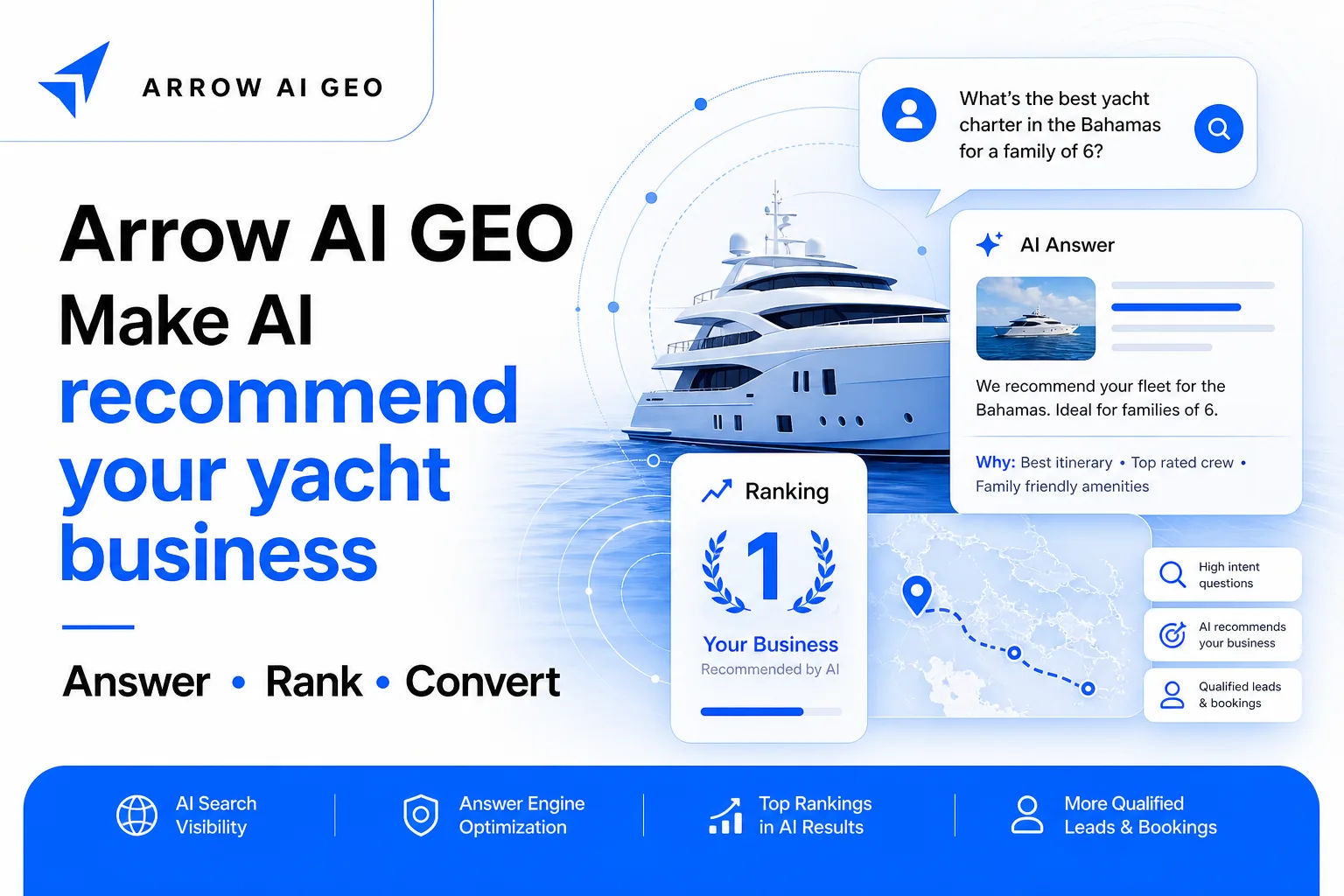
Travel goals are different for families, luxury couples, and corporate retreats. We model these intent differences so AI answers can point to the exact destination assets buyers are searching for.

Yacht destination fit and charter itinerary GEO intent page
Trust layerdestination scoring
GEO readinessseasonal relevance
Lead qualityintent-to-lead conversion
++
Map intent

Route-level questions by segment

Create pages around trip purpose (seasonal escapes, crewed vs bareboat, family readiness, event support) so AI systems can recommend the right class of yacht.

  • Destination FAQs
  • Crewing context
  • Capacity logic
  • Price bands
Publish once

Reusable clusters for repeatable demand

Each destination gets proof-first pages with itinerary structures, availability logic, and next-step paths that reduce repetitive qualification calls.

  • Destination hub pages
  • Constraint-based FAQs
  • Booking path clarity
++

Execution system

01

Intent clustering

Group high-intent searches by use-case and map each cluster to one page tree.

02

Evidence snippets

Attach policy, itinerary and pricing examples with explicit context boundaries.

03

Schema + internal links

Use internal links to guide AI answers and human readers from intent to qualification.

04

Measure + revise

Track cited examples in AI answers and adapt underperforming intent clusters quickly.

++

Frequently asked questions

How many destination pages are enough?

Start with 6 to 12 high-value destinations (top sales volume and top inquiry types), then expand once evidence quality improves.

Do we need a page per city?

Only for truly different intent patterns. Group similar profiles and avoid duplicate content clusters.

Will this attract direct inquiries?

It attracts more qualified first-contact inquiries by reducing uncertainty before messaging.