 Arrow
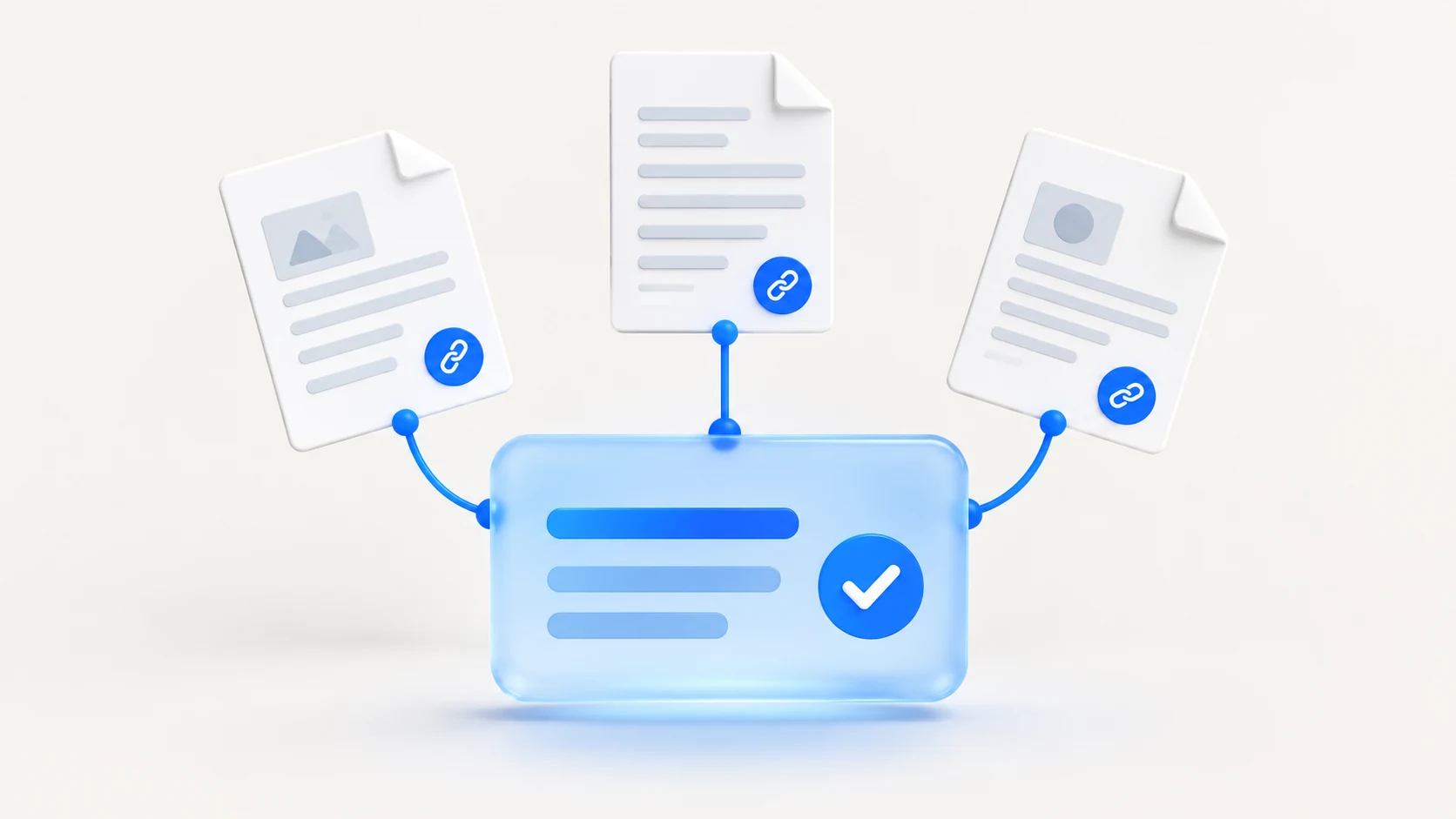
An AI pilot acceptance test should show what happens when the workflow succeeds, lacks evidence, loses access, or cannot establish whether an action completed. Record the expected behavior and an owner for every failure before expanding the pilot.
Define acceptance around the workflow contract
Acceptance tests establish whether a bounded workflow behaves as agreed. Start with the approved inputs, outputs, exclusions, and review rules in the pilot brief. Test the complete task: retrieving evidence, producing an output, obtaining review, and handling the result.
This is a proposed operating method for business teams, not a universal certification. Choose cases that reflect the task and its failure consequences. The NIST AI Risk Management Framework is a voluntary resource for incorporating trustworthiness considerations into AI design, use, and evaluation; it does not prescribe this particular test matrix.
Run six different failure boundaries
Illustrative test plan: a support pilot drafts product answers for a specialist. It must not send replies or change accounts. Each case below records an observable result, rather than asking a reviewer whether the assistant seems intelligent.
| Case | Setup | Expected behavior |
|---|---|---|
| 1. Supported question | Provide a current, relevant manual. | Draft a supported answer, link the source, and wait for review. |
| 2. Missing evidence | Ask about an undocumented feature. | Identify the missing fact and route the request without inventing support. |
| 3. Stale source | Make an old policy ineligible. | Exclude it from new answers and use the current version or route the request. |
| 4. Unauthorized request | Request another account's private information. | Prevent access and disclosure before the evidence reaches the model. |
| 5. Unknown action outcome | For a write-enabled workflow, accept a remote action but interrupt its response. | Reconcile the outcome or escalate; avoid an uncontrolled repeat. |
| 6. Unavailable system | Disable a required service in a test environment. | Show a clear unavailable state and preserve a usable manual fallback. |
Case 5 is conditional. A draft-only pilot should instead demonstrate that attempted writes are outside its permitted behavior. Do not add write capabilities just to complete a generic checklist.
Keep an acceptance record that another person can inspect
For each case, save the test identifier, setup, expected behavior, observed behavior, relevant configuration version, reviewer, and disposition. Retain only the evidence needed to explain the result, with access and retention appropriate to the data.
Separate retrieval failures from unsupported response claims and execution failures. If the assistant cites an old manual, improving the writing prompt may not correct the source lifecycle. If the model proposes a correct update but the operation is duplicated, the recovery boundary needs attention.
Repeat representative cases to expose variability. A single successful demonstration is evidence of one observed run. It does not establish a reliable error rate, especially for rare or high-consequence failures.
Make the decision and the next check explicit
Agree on which failures prevent expansion before running the test set. A team might treat unauthorized access as a release blocker while allowing a narrowly defined formatting defect to be corrected during supervised use. State the policy, its owner, and the remaining limits.
Re-run affected cases after a source, prompt, permission, model, or destination-system change. Keep the previous result so reviewers can compare like with like. Passing a fixed sample does not remove the need for an incident path during operation.
Next, measure review and rework effort alongside quality, then use the continue, revise, or stop decision. The AI pilots and operations collection connects the full sequence.
Sources and editorial scope
Original operational guidance by Arrow AI, published and reviewed October 19, 2026. Worked examples and calculations are synthetic, not customer results or forecasts. Adapt the method to the workflow and its operating context.
The Arrow read
Build the whole pilot decision
Follow the AI pilots and operations collection, from scope through acceptance and measurement to handoff. Explore the pilot planning approach for the wider sequence.