 Arrow
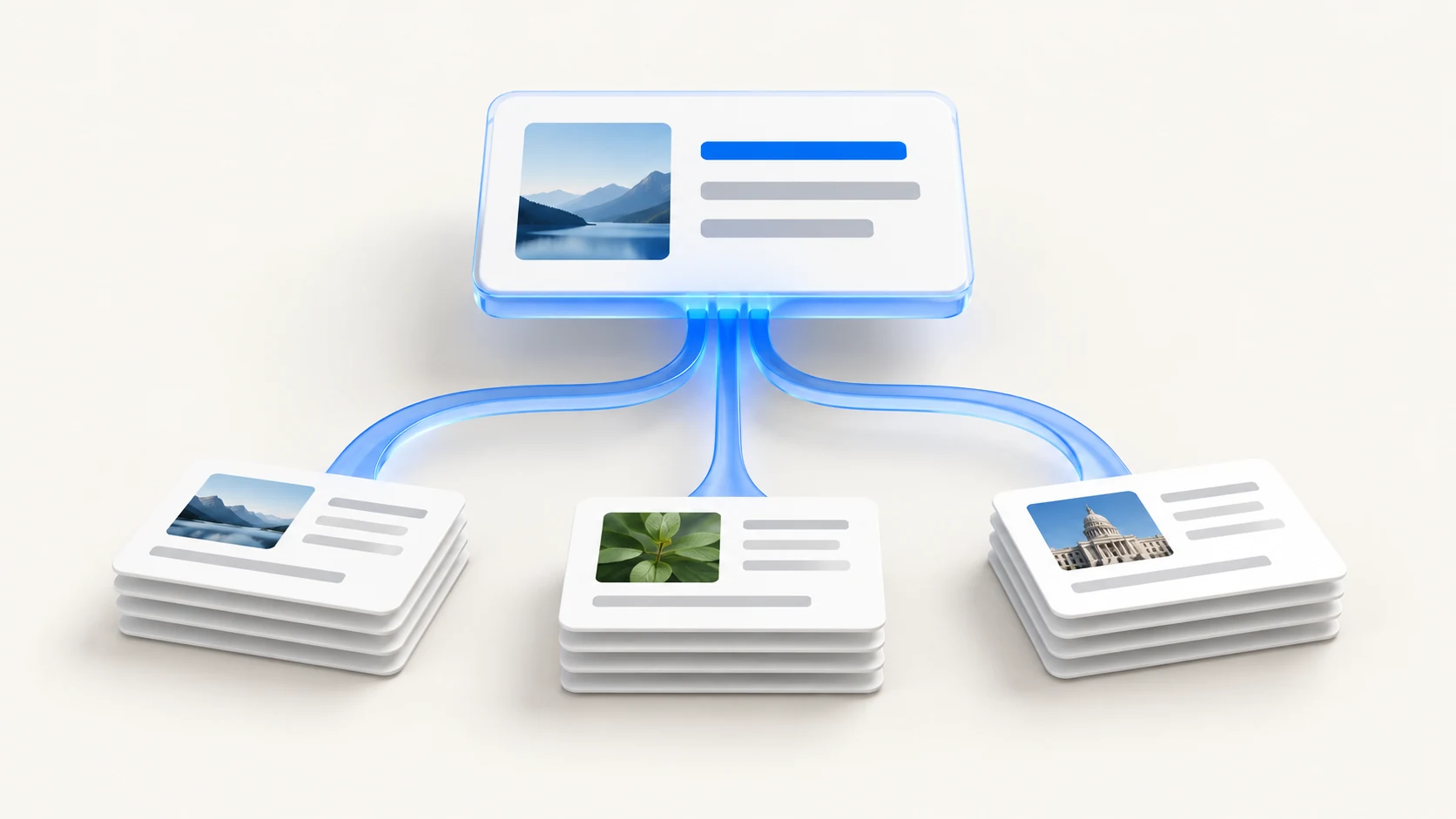
Do not publish a ChatGPT page, a Perplexity page and a Gemini page that answer the same question. Publish one canonical page, keep it current, and make that URL eligible for the crawlers and indexes you care about. Split the URL when the question is different, or when a vendor’s documented behavior forces you to state different facts. A swapped product name is not that difference. Our guide to platform-specific GEO pages versus hubs covers how many commercial URLs a topic can justify. This article is the prior decision: engine-siloed copies of one answer.
When do separate ChatGPT, Perplexity and Gemini pages backfire?
They backfire when the pages are the same article with a different name in the H1. The price, the limit, the comparison and the date have to be maintained three times. The first missed update creates a contradiction you published yourself. An answer can then cite the stale copy, because that copy is still a public page with your name on it.
Maintenance grows with the number of engines, not with the number of questions buyers ask. ChatGPT, Perplexity, Gemini, Claude, Copilot and Google AI Overviews are six surfaces. Six copies of every pricing, comparison and implementation page is a publishing system, not a visibility system. The operating layer only works if the public facts stay in one place that content, measurement and follow-up can share.
Search systems are built to collapse near-duplicates. Google’s canonicalization documentation says that when the primary content of several pages is the same or very similar, Google clusters them and chooses one canonical URL. That canonical is crawled more regularly. Google also says duplicate content on a site is normal and is not, by itself, a violation of its spam policies. It can still confuse readers about which page is current, and it splits the links and metrics you would rather see on one URL. A rel="canonical" annotation is a preference, not a command: Google may select a different URL than the one you name.
There is a sharper line in Google’s spam policies. Doorway abuse includes substantially similar pages created to rank for specific, similar queries. Pages whose only unique words are “ChatGPT”, “Perplexity” or “Gemini” sit close to that description. This article does not claim Google will apply a penalty to a given site. It does say that publishing those copies to occupy more queries is the pattern Google tells site owners not to build. If a site already has that pile, the practical next step is consolidation, which we cover in why visibility drops after too many pages.
Which documented differences are real, and which ones are not a new page?
Vendors do document different crawlers, tokens and indexes. Those differences change who may fetch a URL and which index a surface can draw from. They rarely change the sentences the URL should contain. The table uses public vendor documentation reviewed on November 19, 2026. It is not a ranking model, and allowing a crawler does not mean a product will cite you.
| Documented control | What the vendor says | What to change |
|---|---|---|
| OAI-SearchBot | OpenAI uses it to surface websites in ChatGPT search. A site that disallows it will not be shown in ChatGPT search answers, though it can still appear as a navigational link. The setting is independent of GPTBot. | Allow or block it in robots.txt on the existing public URLs. See the OAI-SearchBot and GPTBot comparison. |
| GPTBot | OpenAI uses it to crawl content that may train generative foundation models. If both this bot and OAI-SearchBot are allowed, OpenAI says it may use one crawl for both purposes. | Make a separate training decision. Do not publish a second copy of the page “for training”. |
| ChatGPT-User | Used for some visits a person starts in ChatGPT or a custom GPT. OpenAI says it is not an automatic crawler, robots.txt may not apply, and it is not what decides Search. | Treat user-initiated fetches as access, not as a reason for a Search-only duplicate. |
| PerplexityBot and Perplexity-User | Perplexity says PerplexityBot surfaces and links sites in Perplexity search and is not used to crawl for foundation models. Perplexity-User fetches pages for a person’s question and generally ignores robots.txt. The settings are independent. | Allow PerplexityBot on the same public URLs if you want that search path. A Perplexity-named rewrite is a different project. |
| Googlebot, snippets, AI Overviews and AI Mode | Google says a supporting link in AI Overviews or AI Mode has to be indexed and eligible to show in Search with a snippet. There are no extra technical requirements, and indexing is not guaranteed. nosnippet also blocks use as a direct input to those features. |
Keep one indexable URL with a snippet policy you intend. Do not stand up a Gemini copy so the same paragraph can be indexed twice. |
| Google-Extended | Google’s crawler documentation describes this robots.txt token as a control for using crawled content to train future Gemini models and for grounding in Gemini Apps and Vertex AI. It does not affect inclusion in Google Search and is not a Search ranking signal. | Choose the token on the same host. It is not the switch for AI Overviews, and it is not a second article. |
| Bing index, for Copilot web grounding | Microsoft’s service documentation says that when web grounding is enabled, Microsoft Copilot gathers information from the Bing index. OpenAI’s current crawler docs assign ChatGPT search discovery to OAI-SearchBot. This article does not treat ChatGPT search as a Bing-index product. | If Copilot grounding matters, the canonical URL needs to be eligible in Bing. Cloning the page into a Copilot URL does not put the original into that index. |
The pattern is consistent. OpenAI, Perplexity and Google each publish a search identity and a separate training or user-fetch identity. Which AI crawlers to allow is the place to record those choices. Allowing search while blocking training bots shows the robots.txt shape for OpenAI. None of those documents asks you to host three wordings of the same answer.
A page about the difference is justified, because the facts differ. The OAI-SearchBot article would be false if someone replaced the agent names with Perplexity’s and shipped it as a twin. That is an engine-specific page in the useful sense: its subject is one vendor’s documented behavior. A “best payroll tool for ChatGPT” page that matches “best payroll tool for Gemini” except for the product name is the other sense, and it is the one that backfires.
When is an engine-specific GEO page justified?
Use the page test, not the logo test. Read the draft with the engine name covered. If a reviewer can still tell which vendor the page is about, because a documented rule, index or buyer decision changed the facts, it can be its own URL. If the reviewer cannot tell, it belongs on the hub.
| Situation | Publish | Leave as one URL |
|---|---|---|
| The buyer question is the same. Only the engine name would change. | Nothing new. Link the hub from related pages. | The canonical answer, with one owner and one updated date. |
| You want search discovery and a different training choice. | Separate robots.txt groups, using the vendor’s tokens. | The public page those groups refer to. |
| A surface draws from a specific index. | Eligibility for that index: Google’s index and a snippet for AI Overviews or AI Mode; Bing’s index when Copilot web grounding is the surface you care about. | The same canonical URL. A twin page is not a second index entry for the original. |
| The subject is one vendor’s documented behavior. | One page whose claims cite that documentation, such as the OpenAI crawler comparison. | Do not rename it for the next vendor. Write the other vendor’s page from that vendor’s docs, or skip it. |
| The commercial question really differs: different decision, evidence and owner. | A distinct page, using the test in the platform pages versus hubs guide. | An engine-by-industry matrix that repeats one body. Add URLs only where that guide’s maintenance test is met. |
That last row is the extension, not a repeat. The hubs guide asks whether a URL protects a distinct commercial decision and whether someone can update it. This article adds the failure mode teams hit first: three URLs that protect the same decision. Passing the commercial test is what earns a new page. Failing it means the engine name was decoration.
No vendor on this list offers a control that says a separate marketing URL will be preferred over the canonical page. Where a preference exists, it runs the other way. Google consolidates similar URLs. OpenAI says that when both search and training crawlers are allowed, it may crawl once. Build the site the same way: one fetch should be enough to read the answer.
How do you keep one source of truth without ignoring engines?
Give each buyer question a home, then point every surface at that home. A topic hub states the question, the answer, the evidence, the date and the person who can change it. Related questions link to it. Content clusters are how those questions stay connected without each one becoming a new silo. Short engine notes, such as “allow OAI-SearchBot”, live on the crawler reference or in a small section of the same page. They do not become a second pricing article.
Measure engines separately. A citation in one product is not a citation in another, and a crawl log is not an impression. The ChatGPT visibility playbook is about making a public page understandable to that search path. It is not a brief to rewrite the page once per logo. Arrow GEO tracks what answers say and which sources they use. It does not promise a recommendation, a rank or a citation.
Before you add an engine-specific URL, write down four lines: the question it answers, the sentence that would be false on the hub, the vendor page that documents that sentence, and the owner who will update it. If the second line is empty, do not publish. If you already published the copies, pick the best URL, redirect or canonicalize the others, and fix internal links so they land on the survivor.
Sources and editorial scope
Reviewed November 19, 2026 against the vendor pages below. Crawler names, tokens and product boundaries change. Check the current document before you edit robots.txt. Nothing here is a measured client result, a citation rate or a guarantee that an engine will recommend a brand.
- OpenAI — Overview of OpenAI crawlers (OAI-SearchBot, GPTBot, ChatGPT-User, independent settings)
- Perplexity — Perplexity crawlers (PerplexityBot and Perplexity-User)
- Google Search Central — AI features and your website
- Google — common crawlers, including Google-Extended
- Google Search Central — robots meta tag, including nosnippet and AI features
- Google Search Central — canonicalization
- Google Search Central — consolidate duplicate URLs
- Google Search Central — spam policies, including doorway abuse
- Microsoft Learn — Copilot service components, including Bing index grounding
- Microsoft Learn — web search in Microsoft Copilot and Copilot Chat
The Arrow read
One question, one page, then check the door.
Write the answer buyers actually ask. Keep it on one URL. Then confirm the documented crawlers and indexes can reach that URL. Start with the hub decision, or run a free audit to see which sources current answers already use.