 Arrow
Bing now offers a beta view of citation opportunities by topic; Google is changing how source links appear. Start with a relevant gap, improve one authoritative page, and track whether the answer, the citation and the business outcome change.
Get a free AI visibility audit Arrow AI shows how ChatGPT, Gemini, Claude and Perplexity describe your brand.
What changed for AI visibility in October 2026?
Two announcements make this month useful for teams deciding what to improve next. On October 13, Microsoft introduced Bing Topics Portfolio in beta. On October 15, Google announced changes to source links in AI Mode and AI Overviews. One helps identify gaps in coverage; the other changes how readers encounter sources.
This is the practical follow-up to our October AI search news roundup. That article covers the wider product changes. This one answers a narrower question: which page should your team improve next, and what evidence would show progress?
| Development | Announced status | Decision for your team |
|---|---|---|
| Bing Topics Portfolio | Beta; sufficient site data required | Look for relevant citation gaps before commissioning content |
| Google inline source links | Updates launching | Check whether the cited page actually answers the question |
| Google official-site section | Testing | Make the correct page for each business task easy to identify |
Bing Topics Portfolio: find the citation gaps worth fixing
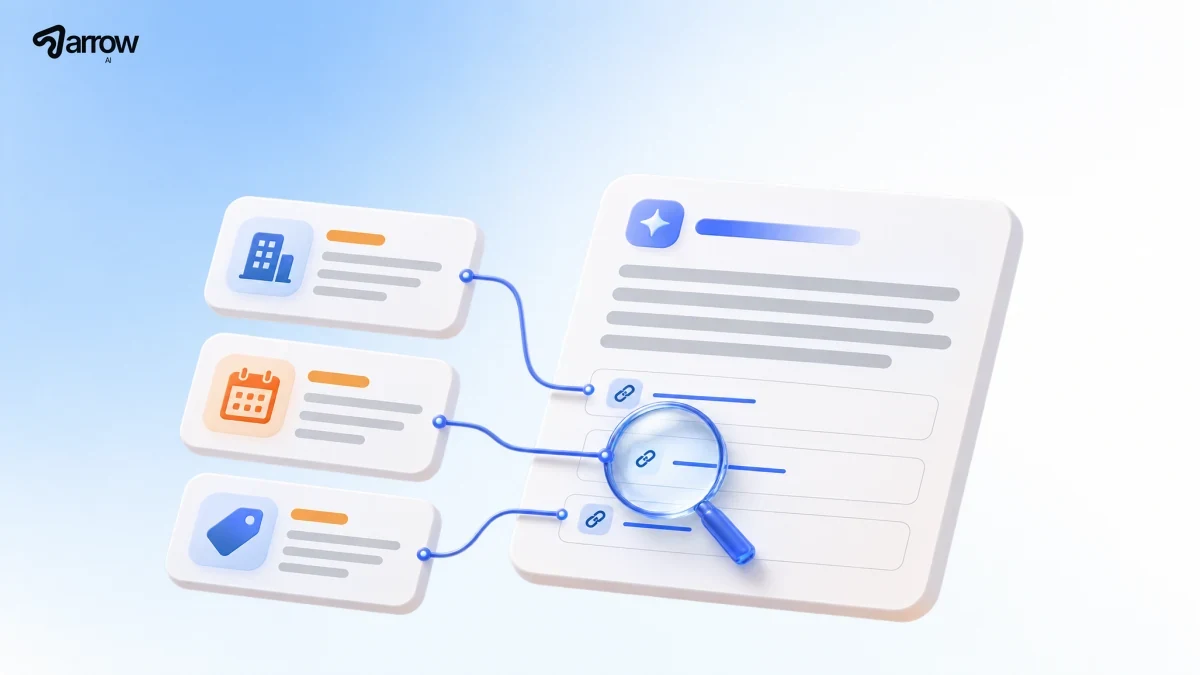
Topics Portfolio groups the grounding queries where your site appears into themes, then surfaces queries where other sites appear and yours does not. Microsoft describes approximate topic size, competing sites and query counts, with opportunity citation volumes displayed as ranges. See the October 13 Bing announcement.
The beta can be absent when data is insufficient. Its classifications can be imperfect, and competitor-branded queries may appear among opportunities. Treat it as directional planning evidence. A blank report does not establish that your brand has no AI visibility.
Arrow's recommendation: review each opportunity against your actual offer. Can your business serve the person asking? Do you have evidence to answer? Does an existing page already own that question? Reject irrelevant topics, improve a useful existing page first, and create a new URL only for a distinct reader need. A citation opportunity is not automatically a qualified lead opportunity.
Google source links: make the destination worth citing
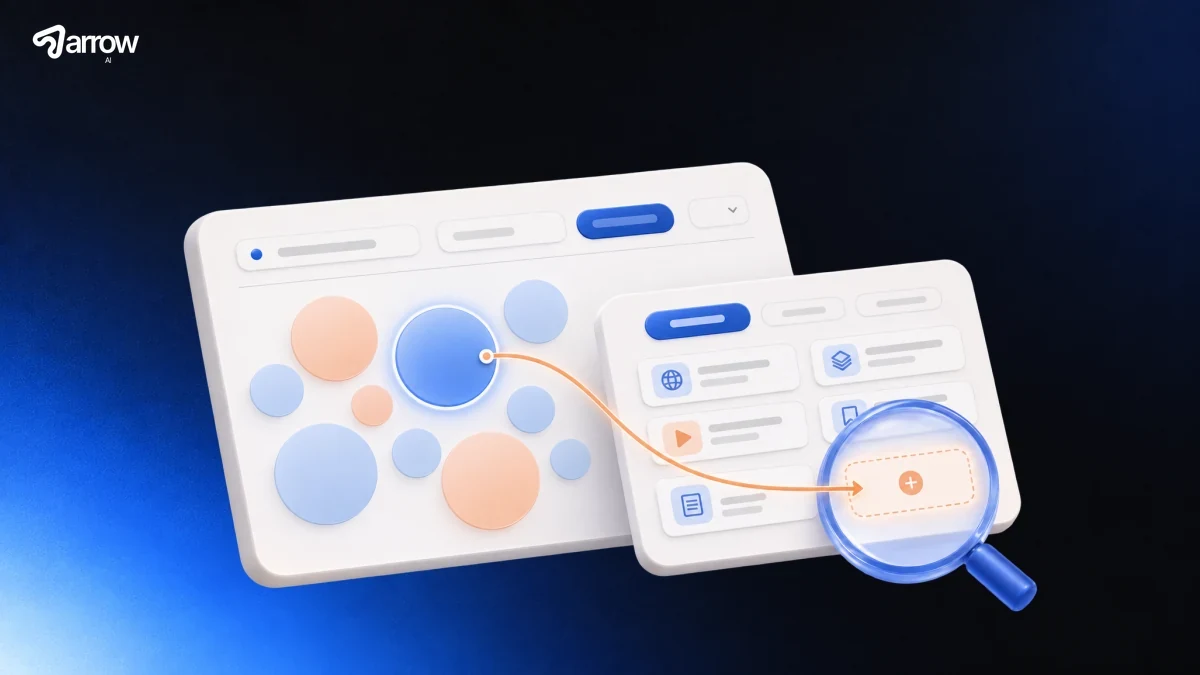
Google's October 15 announcement describes more inline links higher in answers, a test highlighting official sites for specific tasks, and redesigned end-of-answer links with thumbnails. The official-site display is a test, rather than a universal placement. Read Google's source-link announcement.
Arrow's recommendation: choose a clear destination for each task: pricing, product requirements, booking or support. Put the answer in visible text, add its conditions and evidence, and link it from the relevant product page. A pricing page should explain what a buyer pays for; a contact form alone leaves the original question unresolved. These are editorial recommendations, not published ranking factors or guarantees of inclusion.
What still matters: eligibility before optimization
An eligible page remains the starting point. Google Search Central says a supporting page must be indexed and eligible for a search snippet. It does not require special AI markup or an AI text file, and eligibility does not guarantee selection.
Before rewriting, check the intended URL in Search Console, inspect the rendered answer, and confirm internal links lead to it. Review crawl access, canonical tags and preview controls when something is wrong. Keep structured data consistent with the visible page. These are standing requirements, not a new October announcement. Our AI visibility versus SEO guide explains how the work connects.
A worked example: choose one useful page improvement
Consider a fictional scheduling software company. Its team finds a relevant opportunity around migrating from an existing booking system. This example illustrates a decision process; it contains no measured customer results.
| Observation | Check before acting | Useful change |
|---|---|---|
| Other sites answer migration questions | Does the company actually support those migrations? | Document supported imports and exclusions |
| Its own page says only “easy setup” | Can a buyer find steps, dependencies and limitations? | Add a migration sequence and a real support route |
| One cited source is an old help page | Is the help page still correct and the intended destination? | Update it and link it from the product page |
| A suggested query names a rival product | Is there a fair, relevant comparison to make? | Answer with evidence or discard the opportunity |
The team improves its existing migration page rather than publishing several overlapping articles. It records the previous page, the buyer question and the cited sources. After the update is discovered, it repeats the observation under comparable conditions. The result may improve, stay unchanged or vary between runs; none of those outcomes should be assumed in advance.
A seven-day action plan for your next visibility review
Use the week to establish a baseline and ship one defensible improvement. Seven days is a work schedule, not a promise of recrawling, citations or traffic growth.
| When | Action | Evidence to keep |
|---|---|---|
| Day 1 | Review available citation data and existing buyer questions | Platform, date range, queries and cited URLs |
| Day 2 | Filter opportunities by fit, evidence and commercial relevance | A shortlist with reasons to accept or reject each item |
| Days 3–4 | Improve one existing answer page | Previous version, updated answer and supporting sources |
| Day 5 | Check indexing eligibility, navigation and the next action | URL inspection, visible content and working conversion path |
| Days 6–7 | Record a repeatable question set and schedule the next review | Engine, interface, market, prompts and saved answers |
For the question set, include discovery, comparison and purchase questions that match your buyers. Record whether the brand is mentioned, which URL is cited and whether the description is accurate. Keep the market, language and wording stable when comparing observations. The citation tracking guide develops that protocol.
Measure citations, visits and qualified leads separately
A citation proves that a source appeared in an observed answer. It does not prove a person clicked, understood the offer or became a customer. Microsoft's AI Performance introduction describes aggregated citation reporting across supported Microsoft and partner experiences; it is not a complete view of every AI assistant.
Keep four observations separate: brand presence, cited pages, attributable visits and qualified inquiries. Record unavailable data as unmeasured. A small repeatable prompt sample describes that sample, not your share of all buyer demand. For the commercial connection, use our AI visibility attribution guide and record self-reported discovery alongside analytics.
The useful next step is a prioritized page decision backed by evidence. If you need that baseline, request a free AI visibility audit and use it to choose what to improve first.
Continue with the Google and Microsoft visibility collection, inspect the France DPE GEO + AI Systems case, or use the free opportunity finder to prioritize your own search export.
Put the source-to-request work into practice with five free GEO and AI Systems tools: compare brand facts, extract customer questions, create matching FAQs, model capacity and test lead routing. Each produces an export you can review before implementing a change.
Sources and editorial scope
Reviewed October 26, 2026. Platform-specific statements link to the documentation beside the claim. The workflows and examples are Arrow AI editorial guidance. Product availability varies by plan, region and rollout stage; check the linked announcements before acting. Fictional scenarios illustrate a method; they are not customer results, measured demand or evidence of ranking gains.
- October 13 Bing announcement
- Google's source-link announcement
- Google Search Central
- AI Performance introduction
Part of Get found in AI search. Explore the Arrow AI visibility platform or request a free audit to see how often AI includes your brand today.