What changed in AI visibility?
Google source links and Bing citation gaps, with announcement status separated from editorial recommendations.
Read the roundup →A focused collection for understanding Google and Microsoft AI search, choosing useful source-page improvements, and connecting a relevant inquiry to the workflow behind it.
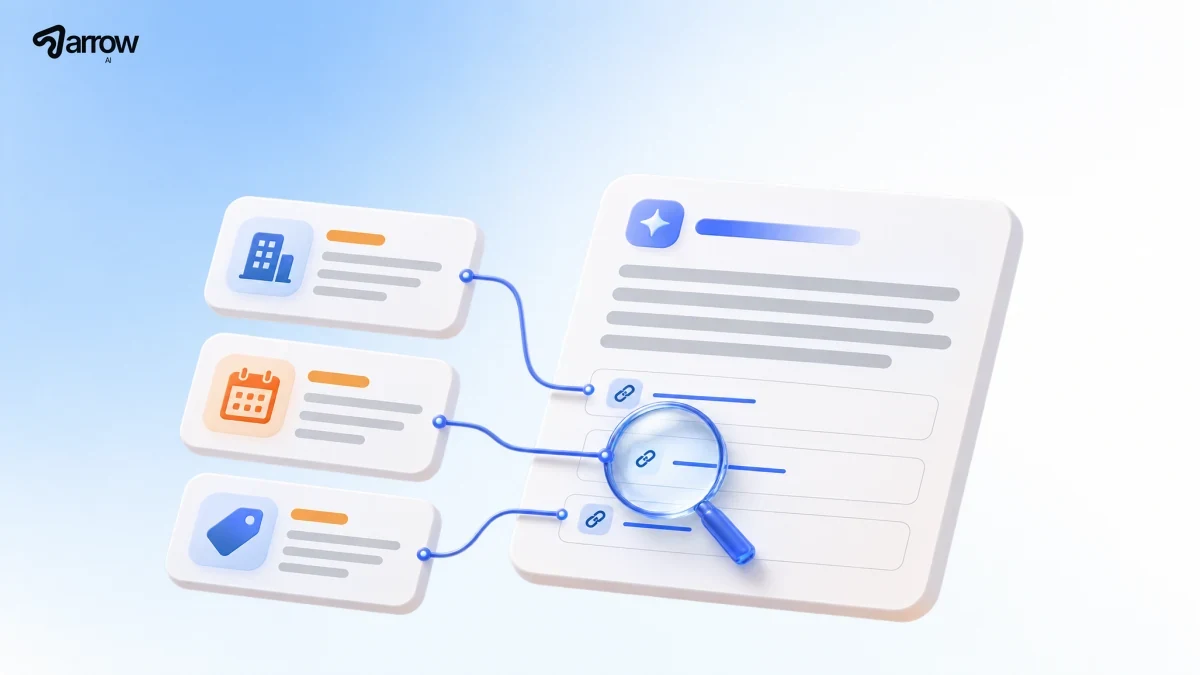
Choose the decision you are making now. The news explains what changed; the practical guides explain what to inspect; the case connects the public source to a usable customer request.
Google source links and Bing citation gaps, with announcement status separated from editorial recommendations.
Read the roundup →Use Bing Topics Portfolio as a directional planning view, then filter opportunities by fit and evidence.
Open the guide →Follow a local service journey and the way GEO connects to Arrow offer 02, AI Systems.
Read the case →A useful destination resolves a buyer’s specific task: understand a service, check a condition or request a quote. Keep important information in readable text and connect the supporting pages. Google’s guidance describes eligibility and standard search foundations; it does not promise inclusion.
Our Google source-link guide examines official-page destinations. Record what appears in the actual surface before drawing conclusions about visibility.
Bing’s Topics Portfolio beta groups a site’s citation activity by topic and surfaces opportunity queries when sufficient data exists. It is a planning signal, not a count of qualified visitors.
Use the step-by-step opportunity review to decide whether a missing topic deserves a page change. Keep Bing, Copilot and other assistant observations labeled by surface rather than treating every source event as the same channel.
Free tool · Bring your data
Import a Search Console Queries or Pages CSV. Get a review order, suggested page actions, questions to observe in AI search and an operational handoff for high-intent inquiries. CSV contents stay in your browser tab.
A source page can attract a well-matched request while the business still struggles to process it. Conversely, a good CRM cannot resolve a misleading public service description. The France DPE case connects those two sides without confusing an observed website implementation with an unverified performance result.
GEO improves the discoverable source. 02 — AI Systems scopes the records, routing, drafts and review steps that follow. A shared definition of service, coverage and responsibility makes the path coherent.
Record source accessibility, dated AI answers, attributable visits and accepted inquiries separately. A crawler visit does not establish a citation. A citation does not establish a lead. Use the measurement method and retain unavailable results as unmeasured.
A focused next step in the Google, Microsoft and local-service acquisition loop.
Read more →A focused next step in the Google, Microsoft and local-service acquisition loop.
Read more →A focused next step in the Google, Microsoft and local-service acquisition loop.
Read more →A focused next step in the Google, Microsoft and local-service acquisition loop.
Read more →A focused next step in the Google, Microsoft and local-service acquisition loop.
Read more →A focused next step in the Google, Microsoft and local-service acquisition loop.
Read more →Use the free GEO and AI Systems toolkit to prepare the source, the answer and the operational handoff. The DPE samples are fictional; the exports are working files for your own review.
Compare supplied observations with the Brand Facts Checker, then inventory actual wording with the Customer Question Miner.
The FAQ Answer Pack Studio produces matching visible HTML and JSON-LD from reviewed answers.
Model review and exceptions in the Capacity Calculator, then test ownership with the Lead Routing Blueprint Builder.
No. Their interfaces, source selection and reporting differ. Record the surface and method for each observation, and keep citations, visits and inquiries separate.
No. Useful, accessible source pages support eligibility and buyer understanding, but selection depends on the platform and the question.
Start with actual buyer questions and available search data. Choose the existing page that should answer a question, improve a specific gap, and repeat comparable observations.
